0 Beauty Guide To Cleansing, Toning And Moisturizing

Labels: , ,

Cleansing


A good cleansing routine is needed to remove makeup and dirt. Not removing makeup up and dirt on a daily basis can block your pores which can lead to an outbreak in spots. Cleansing should be done twice a day. If you cleanse too frequently though, you can strip the skin of its natural oils, which will make those with dry skin have even drier skin. It will also make those with oily skin have even oilier skin, as the glands will become more active to replace it. Therefore it is best not to cleanse more than twice a day.

Before you start to cleanse, you should wash your hands thoroughly to remove any dirt or grease that might have built up.

Eye makeup (such as mascara and eye shadow) can be removed using cotton balls or pads to apply eye cleansing lotion. With your eyes firmly closed, gently wipe across your eyes until all your eye makeup has been removed.

Makeup can be removed as follows. Generously apply cleansing cream to your nose, chin, cheeks, forehead and around the top of your neck, then massage the cream into the skin. You should particularly concentrate on the corners of the mouth, the creases near the nose, the chin (which is especially prone to blackheads), and around the neck. After you have massaged the cream in thoroughly, take a moist cotton pad, and start removing the cream from your face. Work from the sides of your face inwards to avoid rubbing cream into your hair.

Toning


Toning is the process of removing dead skin cells from your face, as well as removing any dirt, makeup or cleanser that may remain after cleansing. By toning, you will help keep your skin clear and firm, as toning leaves you with a layer of new healthy skin cells on top.

With cotton pads, apply toner around your nose and chin. Then apply toner across your cheeks and across your forehead.

Moisturising


When skin is exposed to the elements, it can lose its natural moisture, and you can be left with dry skin. The skin being depleted of it natural moisture can be one of the main cause of wrinkles. Moisturising replenishes the skins natural moisture which help can prevent dry skin and the formation of wrinkles. Moisturising can also act as a barrier to the elements. Many moisturisers now have some sun block in them, and can be identified as such by their SPF value, which should be stated on the packaging. Unless you have very dry skin, always use a light moisturiser.

Using your finger tips, apply the moisturiser lightly to your face. You should start by rubbing the cream into your forehead, and working outwards from the centre. Gently apply the cream around the eyes, making sure you don't get it too close to them. Massage the cream into your cheeks and around your jaw line, around your chin, then your mouth and nose, and then around your throat and your neck. Don't apply too much moisturiser, as this can prevent your skin from breathing.
Read more

0 Diagnosis and Treatment Of Wrinkles

Labels: , ,
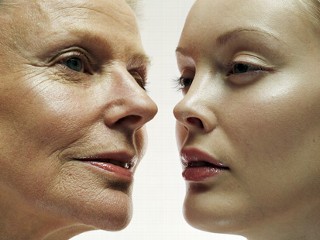
Wrinkles are creases in the skin. Wrinkles are the thin, creased, and sagging skin that is especially noticeable on the face, neck, and hands. Wrinkles develop as we get older because natural substances such as collagen , elastin and hyaluronic acid (which gives skin volume), which provide the skin with structure and volume decrease with age. Skin wrinkles typically appear as a result of aging processes such as glycation or, temporarily, as the result of prolonged (more than a few minutes) immersion in water. Wrinkles are a by-product of the aging process. With age, skin cells divide more slowly, and the inner layer, called the dermis, begins to thin. Sun damage is one of the most important causes of skin ageing and skin disorders such as skin cancers.

Overall, exposure to ultraviolet radiation from sunlight accounts for about 90% of the symptoms of premature skin ageing, and most of these effects occur by age 20. Smoke causes a marked reduction in the production of new collagen. A lack of new collagen results in the development of wrinkles. Rapid weight loss can also cause wrinkles by reducing the volume of fat cells that cushion the face. This can cause the skin to sag. There are numerous over-the-counter treatment options for wrinkles, including various creams and lotions. Retinol is a vitamin A compound and is the first antioxidant to be widely used in nonprescription wrinkle creams. Antioxidants are substances that neutralize free radicals - unstable oxygen molecules that break down skin cells and cause wrinkles.

Lasers may also be used to minimize wrinkles. Avoid spending too much time in the direct sun. Botulinum toxin (Botox) may be used to correct some of the wrinkles associated with overactive facial muscles. Alpha hydroxy acids, beta hydroxy acids and poly hydroxy acids are all synthetic versions of acids derived from sugar-containing fruits. These acids are exfoliants - substances that remove the upper layer of old, dead skin and provoke the growth of smooth, evenly pigmented new skin. Never use a sunlamp or tanning bed or lie in the sun to get a tan. Wear a sunscreen on your face and hands every day. Some patients may choose plastic surgery for age-related wrinkles. Don't go to the tanning salon.

Wrinkles Treatment and Prevention Tips


1. Don't smoke.

2. Avoid alcohol and pollution areas.

3. Protect your skin from the sun.

4. Choose products with built-in sunscreen.

5. Wear a sunscreen on your face and hands every day.

6. Never use a sunlamp or tanning bed or lie in the sun to get a tan.

7. Moisturizers can't prevent wrinkles, they can temporarily mask tiny lines and creases.

8. Retinol is a vitamin A compound antioxidant to be widely used in nonprescription wrinkle creams.
Read more

0 Facial Exercise For You

Labels: , ,
Exercising our body is done either by going to the gym or by doing some household chores. In that case our face also needs to be taken care off. By the amount of pollutants that affect our face we are bound to have some or the other problems.

One of the apprehensions about life, for many is the idea of being old. As times flies, slowly and steadily it starts reflecting on your face in the form of wrinkles, lines, double chin, sagging of the muscles and many other things.

To avoid such problems relating to wrinkles and sagging we can do facial exercise. These would help you ward off all possibilities of wrinkles. It will help you give that extra glow which has disappeared from your face for a very long time.

There are face-lifting tools in the market which you can use, depending upon how useful they prove to be. Then there are the common facial exercises which you can do it at home at your own free will.

Facial exercises for you


If you want to sharpen your jaw line you can slap your chin with the back of your hand quickly and very lightly for at least 30 times.

Stroking your face with upward movement can relax your mind and body.

To reduce the small lines around your mouth you can curl your lips into your mouth and then try to bowl air through your mouth without opening your mouth. This would help to stretch your muscles around the mouth. While doing this count till 5 and then relax, repeat this at least 10 times for better results.

But there has been a long running debate about facial exercise, whether they are really good or just make things worse. This can be found only when you talk to other people or consult your doctor about the same.
Read more

0 Makeup Tips For Magical Eye

Labels: , ,
Eyes
the windows of the soul. Eyes give your face energy and individuality and do not have to be a certain size or shape to be considered pretty
all eyes have their own unique beauty.
When makeup is applied to look natural it will bring out the eye’s true color and enhance the eye’s beauty.
When you feel good about your makeup you will be more confident and will have one less thing to worry about.
A subtle application of eyeliner, shadows and mascara work together to create magic and make your eyes look their best.

Eye Shadow


Eye shadow is meant to highlight and define the eyes. Eye shadow is used to create depth to bring out the beauty of the eyes. A dark color used on the lid will make the eye appear smaller, while a lighter color will make it appear larger. That is what eye shadow is about - creating illusions. These are the basic techniques for the following eye shapes:

Small eyes: Don’t use too much shadow or liner – it will make you eyes look smaller. Apply a light color on eyelid, use a darker color in the crease and use a highlighter under the brow.

Large eyes: Wear darker shadow on the lid and extend it to the crease. Use a flat color under the brow to highlight.

Deep-set eyes: Use light colors on the eyelid and under the brow. Use a medium color in the crease. Emphasize the outer corners with shadow.

Wide-set eyes: Use darker colors on the inner corners of the eye.

Hooded eyes: Apply light colors on the lid. Use darker colors from the center of the eyelid to the outer corners and blend.

Round eyes: Make round eyes longer by using color all around and extending toward the outer corners.

Oriental eyes: Apply highlighter under the brow. Use light shadow on the inner half of the lid and a darker color on the outer half.

Light colors cause the eyes to open, dark colors will cause the eyes to recede
If you have very light skin avoid dark shades
Be careful with shimmer – they will bring attention to imperfections and wrinkles.
The eye area is the first to show age don’t tug on the skin.

Eyeliners


Eyeliners are meant to define the eyes so they should do just that; not be the focal point of your makeup. Eyeliners come in various colors and forms liquid, pencil etc. Keep the eyeliner natural. Pencils are available in many colors (for the best look stick to black or brown ) and can be sharpened for a fine line. For a smudged effect use a sponge tip shadow applicator or an eye shadow brush. When your pencils are too soft refrigerate them. When they are too hard soften them by holding them between your fingers.

To line the eye, start on the lower lid, just beneath the lashes. When you are finished always smudge the line with your sponge. Stay as close to the lash line as possible. On the upper lid, draw a line form the inner corner to the outer corner, thickening the line toward the outer corner. After the age of 40 keep the line in between the lashes.

Mascara and the creation of beautiful lashes


Mascara frames your eyes and can make your face come alive. Mascara softly accentuates the eye while thickening and darkening the lashes; it is the finishing touch for eyes. There are several different types to choose from, thickening, and waterproof to smudge proof. Waterproof will need a special remover and smudge proof will wash off easily. It is not a good idea to wear waterproof mascara for extended periods of time since it has a tendency to dry the lashes.

Select a shade of mascara that complements your coloring. Dark shades on pale eyes with brown lashes will darken them and will look harsh. Stay away from blues and other colors since they will ruin your look.

Lashes that are hard to curl may need the help of an eyelash curler. Curl your lashes before you apply mascara – hold for ten to twenty seconds.

To apply mascara look straight into your mirror with your chin slightly lifted so you can see your lashes. Insert the wand only once and twist, don’t pump. Pumping can break the brush bristles and distribute the mascara unevenly and will dry out the mascara faster. Start by rolling the wand from root to tip in an upward motion. Reinsert the brush and apply again. If your eyelashes are thick and long they may clunk together. If this happens let them dry and then separate them with the corner of an eyebrow brush.
Read more

0 How To Get Great Looking Skin

Labels: ,

  • Genes
  • Inner nutrition - what we eat and drink
  • Exercise
  • General health and well-being
  • Emotional health, and
  • Outer nutrition - how we take care of our skin
While we can't alter our genes, we can improve our skin by making the necessary adjustments in the areas we can influence. Read on to discover the basic components of a healthy outer nutritional plan for your skin.
If you seriously want great skin the very first thing to do and wear a hat and good quality sunscreen when out in the sunshine. Having said that, let's move on to understand the next three basic foundations to great skin.
If you want your skin to look and feel great, careful cleansing is very important. This should be done first thing in the morning and last thing at night to remove pore-clogging dirt. Don't cleanse enough and you could find yourself prone to spots. Cleanse to often and you could be stripping away essential oils and be susceptible to dry skin or even eczema. Understanding your skin type (normal, dry or oily) and using a cleanser to match is the best foundation for great looking skin. Remember to rinse your face with warm water after using a cleanser, as any residue will continue to work on the skin if not completely removed.
Our grandmother's used soap and water…isn't that good enough? Soap is not very good at removing makeup because it does not contain enough oils to dissolve the staying power that most cosmetics have today. Remember the 'tight' feeling after your have washed your fact with soap? Soap can be very drying on your skin and may wash away essential oils. Another reason not to use soap is that it is not matched to the natural balance of our skin. Soap is generally alkaline, whilst skin is naturally acidic.
The second step to great outer nutrition for your skin is to tone. Toners are designed to remove any last traces of cleanser, while also helping to tighten and refine pores and prevent the build-up of dead skin cells. After toning your skin should fee and look revitalised and refreshed, and ready to be moisturised. Again you will need to apply a toner that matches your skin type.
The third foundation step is to apply moisturiser to help restore the moisture loss caused by the drying effects of sunlight, central heating, wind, cold and pollution. A good daytime moisturiser would contain a sunscreen and will be easily absorbed into the skin. At night you should use a richer, more nourishing cream, as this is when your skin more readily absorbs moisture.
Despite the plethora of products on the market and the myriad of additives…. the most important ingredient of any moisturiser is water! If water is just splashed on the skin it will not say there. Moisturisers are basically oil and water emulsions which contain a humectant (a substance added to another to make it moist), which attracts water and helps 'fix' it in the upper layers of the skin.
Moisture that is lost firm the skin needs to be replaced quickly so that the surface of the skin is kept both soft and smooth. The living cells in the layers need water so that they will not shrivel up and die. A moisturiser can protect the skin by providing a varier between the skin and the external environment. It also prevents the loss of moisture from the deeper layers of the skin.
Should people who have oily skin use a moisturiser? Moisturisers are particularly recommended for people with dry skin but everyone can benefit from using a moisturiser. You simply need to ensure that you choose the correct moisturiser for your skin type. People with oily skin should choose a moisturiser that hydrates their skin whilst helping absorb any excess oil.


Read Other Skin Related Articles
Read more

0 How To Deal With Dry Skin

Labels: , ,
Every day 4-8 oz. of water evaporates through the skin, and we don't even notice how it happens. Replenishing water by drinking more fluids is helpful, but does not guarantee smooth and resilient skin. Moisture balance is regulated by chemical reactions in tissues, and is not directly related to the amount of water you drink.
If we could apply water topically, it would not help much either. Skin does feel soft and moisturized right after a bath: it happens because the horny layer (the outermost skin layer), which is formed by dead skin cells, absorbs water. During a bath up to 2 oz. of water can be absorbed by the skin. But this water is not allowed any deeper than the surface cells. Later, within 10 minutes, all this water evaporates, leaving skin dry again.
Human skin has its own mechanism to prevent moisture loss. Our skin cells work hard to create a protective layer. This layer consists of oils, aminoacids, sugar compounds and other elements, either water or oil soluble. All together they bind with water and don't let it evaporate. Water, that is not allowed to leave skin surface, is absorbed by the horny layer cells. The skin becomes softer, smoother and more flexible.
Hot or cold air, low humidity, frequent contacts with water or cleansing solutions ruin the protective layer, and skin loses its natural ability to hold moisture. When water level in the skin drops by 10%, the skin becomes dry, itchy and flaky.
As we age, skin's protection mechanism slows down and skin becomes dry. In some people dry skin is inherited genetically.
Even though the outermost skin layer is made of dead cells, we have to take care of it. The primary function of the horny layer is protection of deeper skin layers, where new cells are born. Regular use of hydrating creams helps to prevent water loss, restore moisture balance and elasticity of the outer skin layer and help it do its job.
Oils, mucopolysaccharides, and fatty acids are widely used in cosmetics to prevent water loss. The most effective cosmetic ingredients for this purpose are liposomes, ceramides and sphingolipids.
Liposomes are microscopic spheres that can be used to encapsulate water, vitamins or other beneficial ingredients. Because these elements are similar in structure to cell membrane, they are easily utilized by the skin. They can penetrate skin surface, bind with it and release the substances they carry.
Ceramides and Sphingolipids are the elements that hold skin cells together so that the environment can not get in and the moisture can not get out. Lipids are lost with age, and the moisture barrier is weakened. Research shows that applying ceramides topically has the effect of generating ceramide production in the skin, thereby increasing the lipid content and reinforcing the protective barrier.
Look for creams with the above ingredients to keep your skin in its best condition and defy aging.


Read more

0 Walk Your Way To Health

Labels: , ,
Which one will give you the best, most immediate results in terms of aerobic fitness, muscular fitness and flexibility?

We are all searching for answers. We all hope to find the quickest way to improve or maybe regain our health. 

But what about walking? Most of us think of walking as something you do maybe to get yourself started again on the road to fitness, but as our primary method of fitness?

Why not?

Here’s some thoughts to consider;

A brisk walk for 30-60 minutes can produce a deficit of as much as 300 to 400 calories depending on your current level of fitness.

Making that same walk just 3 or 4 times a week over the course of a year could result in a weight loss of 16 pounds. That assumes you don’t change your current diet.

Combine that walking with a reasonable diet and the numbers multiply quickly.

Not bad for one of the most underrated exercises of all.

On top of that, research shows that 10 minutes 3 times a day offers the same benefit as 30 minutes 1 time a day. Sorry, no more excuses for not having enough time!

But let’s consider some of the other benefits:

Walking impacts the three major areas of health and fitness; aerobic fitness, muscular strength and flexibility. Not many other activities hit all three at such a consistent level as walking.

When done with proper form walking represents a much lower risk of joint injury than many other forms of exercise.

It can be done almost anywhere. Want to swim? You need a pool or a lake or ocean.

Want to cycle? First you need the equipment and then you need a reasonably safe place to ride.


Still not convinced?

Let’s get personal. In November and December of 2003, while on an extended visit to Michigan, I decided to walk each day. It gave me the opportunity to get out and see the town and meet the people.

When I arrived in Michigan I weighed in at 235 pounds and had a 40 inch waist. I jumped right in the first morning with a good brisk walk. I probably walked 4 miles that first day, but that was enough.

Now mind you I walked every single day for the 60 days I was there, but when I arrived home in California I was a slim 190 pounds with a 31 inch waist.

Yes, that’s 60 days! I walked a lot more than 30 minutes, in fact usually it was more like 2 to 3 hours, but still we’re talking about 60 days not 365 days to lose that kind of weight.

And I felt fantastic to boot!

I’m not saying that everyone will get the same results that I did, but if you got even a quarter of the results in 60 days, you’d be pretty happy wouldn’t you?

Walking is definitely not a myth and I’m not sure it’s a miracle either, but it sure does rank right up there as one of the best all around exercises of all time!

Always consult a physician before beginning any exercise program.

If you would like to learn more about walking and it’s benefits, just drop us a line we’ll hook you up with some other great resources.
Read more

0 A Walk a Day Keeps the Doctor Away

Labels: , ,
Should you work out when you have a cold? How about if you have a fever? For many avid exercisers, especially beginners who have just managed to make walking a habit, stopping to give your body a rest can feel very threatening. You are afraid that if you stop, you may never start again. But there are certain circumstances when exercise can do more harm than good, especially when you are recovering from an illness like the common cold or the flu.

If you decide to exercise when you are stuffed up, make sure you really check with your body first. Do you feel excessive fatigue? How is your breathing? Does it feel difficult to fill your lungs as you normally would? Make sure you keep track of your pulse, both at rest and while you are working. If it seems unusually high, you might want to consider taking another day off. 

If you do decide to take up the challenge, take it slower than usual. For example, even though it may be your day for hills, modify your schedule and keep it flat. If it is a fast pace day, walk at a normal speed instead. Don’t try to beat the clock this time. Finally, make sure you drink plenty of water. Hydration is crucial, especially when fighting off a cold. The following is a summary of guidelines you should follow if you decide to walk despite the sniffles:

•Wait until you are in the latter phase of your cold.
•Take your morning pulse; if it is 10 beats higher than normal, take another day off.
•Do a modified version of what you normally would do until you feel better.
•Start out slowly; if you feel okay, pick up the pace gradually.
•Drink plenty of water and make sure you get adequate rest.
•Listen to your body. If it doesn’t feel right, then it probably is not.

A simple stuffy nose is one thing, but exercising when you have a fever or other flu symptoms can be more damaging than good. Because a fever indicates that your body is fighting an infection, your immune system is on overdrive in an attempt to suppress the attacking virus. If you go out and exercise at such a time, you are putting even more strain on an immune system already under extreme stress as it attempts to fight off the intruder. Exercising will steal some of the energy away from the task at hand (healing) and could set your body up for a prolonged and more severe attack.

If it is the flu or fever you suffer from, take time off! Wait until the illness has subsided. Be honest with yourself about how your body feels. Pushing yourself when you are not ready will only drag the healing process out longer, setting your goal further and further back. 


 raymondlee12
Read more
 
HealthTips4Free © 2010 | Designed by Blogger Hacks | Blogger Template by ColorizeTemplates